
So Long
September 6, 2026
…and thanks for all the fishing. We are hosting our last guests for the season, and we’ll be closing up shop as of Monday. We’ll be open again for the May long weekend in May, 2027.
We are grateful for all the people, families, couples, dogs, bears and others who visited us this summer. It is always gratifying to see so many people in awe and in love with this place as much as we are, and who remind us how lucky we are. We are very grateful.
This summer we had the opportunity to break bread, drink wine and roast weenies with CERN physicists, world-class chefs, photographers, the glorious chaos that are small children, fisher-persons and hikers who all taught us a little more about the good in this world.
Many of you promised to come back next year, and we are looking forward to it.
Love you all,
Bernie & Patti
No News
August 13, 2026
…is good news
No new bear sightings or fires of note.
Bears and Fires
August 10, 2026
As of this writing there are two things you should be aware of as you plan to visit us:
Fires
The Summerland Fire is in the news and thousands of people and livestock are or have been evacuated. This fire does not threaten us. It’s in a different valley hundreds of kilometres to the southwest. This does not mean there isn’t a fire hazard. Conditions here are dry again this summer.
There is a fire ban on. No campfires or any open fires of any kind are allowed. BBQs, gas stoves, and the like are still permitted.
The smoke, however, is a bit thick. If you have a medical condition (asthma, for example), you might want to check current conditions. Although I’m not sure where in North America you’d be safe right now.
Current conditions and smoke forecasts can be found at (search on “Spillimacheen“):
https://wildfiresituation.nrs.gov.bc.ca/map
Bears
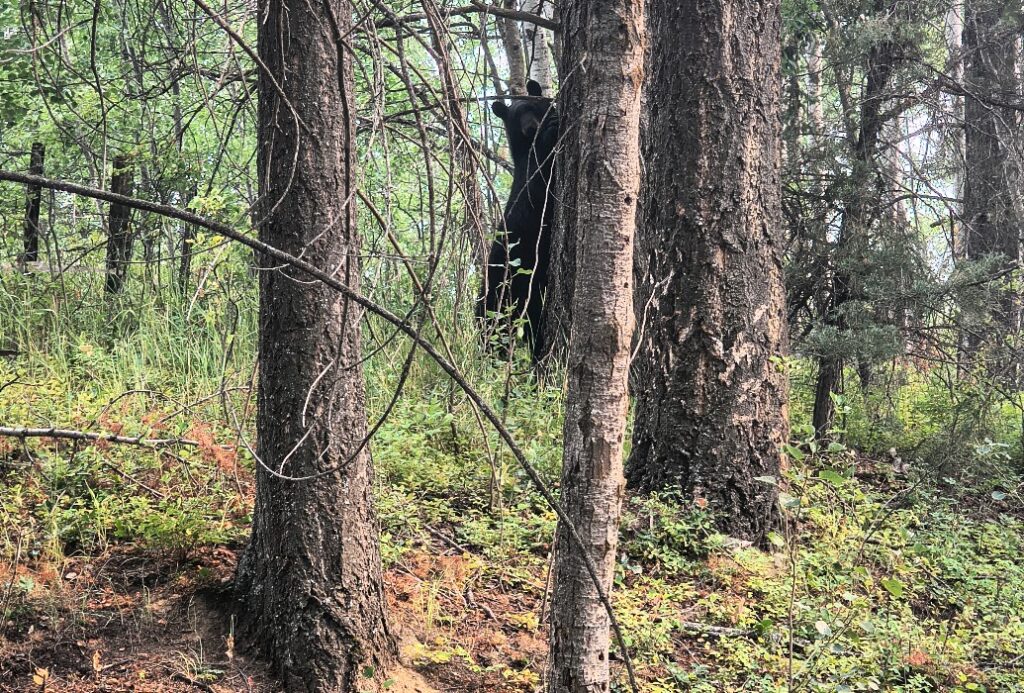
We had visits from three different bears yesterday. This is very unusual. We usually have one or two sightings a year. Three on the property in one day is remarkable.
This time of year they have become hyperphagic. Their bodies have turned on the “I’m hungry” signal all the time. They eat up to 22 hours a day, and put on about two kilos a day until hibernation.
What this means to you:
Bears typically don’t want anything to do with humans, or their dogs. If you give them a chance to avoid you, they will. Here are some things you can do to keep yourself and your group safer:
Practise good food hygiene –
Do not leave food outside. Do not store food outside or in your tent. If you cook outside, clean up immediately afterwards. Do not leave food garbage outside. Do not leave food prep gear outside, including your stove. Anything that has come in contact with food has to be properly stored even after it’s been cleaned.
Problem bears are those who have learned to associate people with food. Practising good food hygiene means this won’t happen in the first place. Wild bears are the most dangerous if you are seen as a threat to their cubs, you surprise them or get between them and their food (a deer carcass, for example).
Keep your dogs leashed –
Even if your dog has 100% perfect recall, that’s not going to help you if the bear decides it’s a threat and chases Fido back to where you are. Also, as slow and cute as bears look when they’re walking, they can run 50 kph (30 mph), definitely faster than you. Grizzlies are even faster. Downhill does not slow them.
Your dog doesn’t have to run faster than the bear to escape. It just has to run faster than you.
Travel safely –
Yes, carry bear bells, bear spray, an air horn and/or bear-bangers (pen flare), and learn how to use them.
Travel in groups of two or more, even short distances like going to the bathroom, especially at night. Look up and take the earbuds out. Make noise or sing so the bear knows where you are and can avoid you (they’ll see, hear or smell you first most of the time).
Most bear sprays have a stated range out to ten metres (33 feet), and an effective range of about five metres (sixteen feet). Depending on the size of the can you’ll get five to ten seconds of continuous spray. That’s two or three short bursts — not a lot. Practise outside with an expired can if you have one. Yes, people have dosed themselves in their garage. Don’t do that.
The first time you use it shouldn’t be your last.
DO NOT RUN
If a bear is close enough for you to use your bear spray, you’ve probably already made several errors in judgment.
Back away slowly. Speak calmly so it knows you’re human. Don’t stare it down, this might be taken as a challenge. Most charges are bluffs and stop short — stand your ground.
If a bear actually makes contact: with a grizzly that you surprised, play dead — face down, legs spread, hands behind your neck to protect it, pack on, stay still until it’s gone. With a black bear, or any bear that stalked you or came into your tent, do the opposite: fight, and go for the face.
Running triggers their chase instinct. To keep yourself safe, first learn the difference between black bears and grizzlies, and between their defensive and predatory behaviour.
Is that a black bear or a grizzly? https://lovebears.org/black-bear-vs-grizzly/
I surprised a bear, now what? https://www.nps.gov/articles/bearattacks.htm
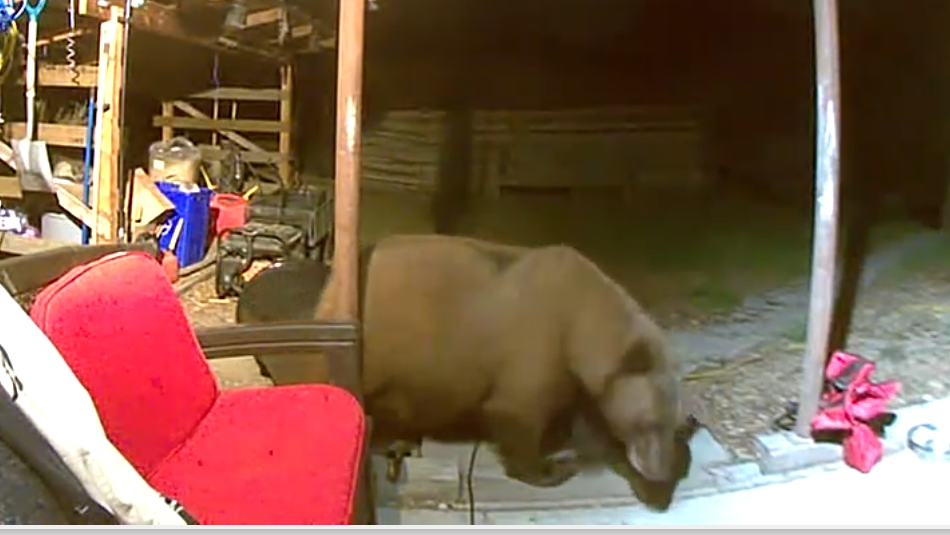
Situational awareness is your friend.